Description
现在输入N个平面坐标系上点,每个点均是过原点的直线(形如y=kx,k为int型,0<k<100)上的点,现要求判断这组输入的点的坐标之中,最多有几个点是在同一条y=kx直线上。PS:每组测试用例中不同斜率k的个数不超过10,要求使用size不超过10的哈希表来储存k。使用线性探测法解决冲突。
Input 首先输入的是点的数量N,接下来是N行数据,每行都是一个点的坐标。
Output 输出一条经过最多点的直线上的点的数量M(int)。
Sample Input 1
9 1 1 2 2 1 50 4 4 3 6 5 5 2 90 3 99 3 9
Sample Output 1
4 分析第一次更新 这次所贴代码还没有过OJ系统,始终有一个Wrong Answer,笔者还没有查明具体的原因,但是基本的思路还是确定无误,因此先贴上来方便查验交流所用。 首先声明,这并不是一个好的完整的哈希表,然而笔者向来主张具体的场景应用具体的数据结构和相关的操作集,面对这样一个简单的问题,我们显然不需要一个完善的哈希表。 这里只说下核心思想: 哈希表的主题是一个列表,表里的每个元素为一个长度为2的小列表,分别放Key和Value,初始化时key为None,value为0,这里的Key就是咱们的斜率,value每次被寻到就加个1,用来计数。index用key%size来找,如果位置被占了就直接往后找(线性探测法)。
第二次更新
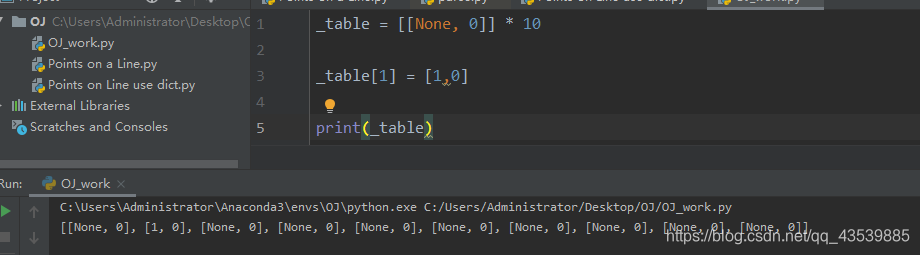
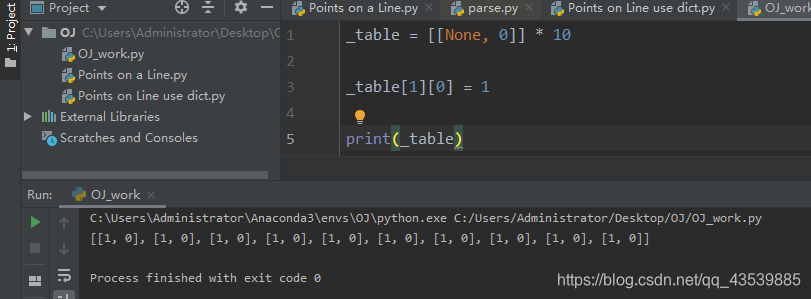
第一次更新的问题找到了 修改如下 self._table[index][0] = key self._table[index][1] += 1 改为 self._table[index] = [key, self._table[index][1] + 1] 可能有些同学会像我一样一头雾水,这两句看起来不是一样吗 现在让我们看一下他们有什么区别
Coding:
from typing import List, Any

class HashTable(object):
    def __init__(self, size: object = 10) -> object:
        self.size = size
        self._table = [[None, 0]] * size

    def find_key(self, key):
        index = key % self.size
        t = 0
        while self._table[index][0] is not None and key != self._table[index][0]:
            index = (index + 1) % self.size

        return index

    def append(self, key):
        index = self.find_key(key)
        if index is not None:
            self._table[index] = [key, self._table[index][1] + 1]
            return True
        else:
            return False

    @property
    def find_max_value_re_key(self):
        max_value = 0
        # max_value_index = -1
        for item in self._table:
            if item[0] is not None:
                if item[1] > max_value:
                    max_value = item[1]
                    # max_value_index = item[0]
            else:
                continue
        return max_value

n = int(input())
h = HashTable()
k = 0
for i in range(n):
    temp_list = input().split(" ")
    slope = int(temp_list[1]) // int(temp_list[0])
    h.append(slope)
print(h.find_max_value_re_key)
或者用字典 当然不符合题目要求 只是单纯解决这个问题,我们可以这么做
n = int(input())
hash_table = {}

for i in range(n):
    temp_list = input().split(" ")
    slope = int(temp_list[1]) // int(temp_list[0])
    if slope in hash_table:
        hash_table[slope] += 1
    else:
        hash_table[slope] = 1

value = hash_table.values()

print(max(value))